|
|
| Introduction Belvoir Caesarea Philippi Camel Ein Gedi fig trees Gethsemane Golden Gate Golgotha Josephus Kidron Valley Mt. Hermon Mt. Olives Mt. Nazareth Nazareth Western Wall wildflowers
|
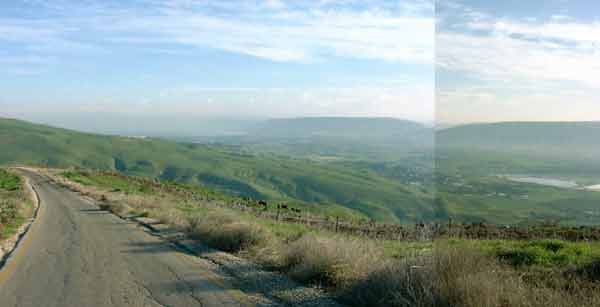
The photo above shows the road down from the remains of the Crusader castle Belvoir situated above the northern end of the Jordan River Valley. The Sea of Galilee was in the upper left corner of the picture As this was late February; there was much grass in this place, not the same in August. The crusaders occupied the area after there were complaints that Christians going to the Holy Land were being murdered by the Moslems. During the Fatimid reign of Hakim the Mad, a Shiite ruler of Egypt, churches were destroyed, Christians were persecuted, and pilgrims from Europe were unable to visit Jerusalem. In 1099 Jerusalem was conquered by the Crusaders. In 1102 Saewulf wrote an account of the attacks on Christians traveling to Jerusalem. "We went up from Joppa to the city of Jerusalem, a journey of two days, by a mountainous road, very rough, and dangerous on account of the Saracens, who lie in wait in the caves of the mountains to surprise the Christians, watching both day and night to surprise those less capable of resisting by the smallness of their company, or the weary who might lag behind their companions . . . numbers of bodies lie scattered in the way, and by the way-side, torn to pieces by wild animals." During one crusade the Christian capitol of Constantinople was attacked by the European Crusaders in their greed for power and plunder. A Muslim army attacked Acco ending the Crusader presence in the Holy Land in 1291. In Muslim nations preaching
Christianity to Muslims is forbidden. Muslims who
converted to Christianity were treated badly and sometimes
killed under Islamic laws against apostasy. Christians
have been attacked and killed by militant extremist
groups. In 2015 Islamic State was accused of genocide,
kidnapping, and the rape of women and girls as young as nine. Al
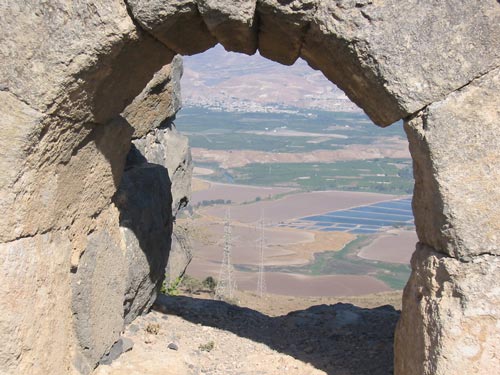
Shabaab is guilty of genocide (2019). A view from the castle towards the Jordan Valley (Sept. 2003). The meandering river hardly visible in the left portion of the window opening.
|
|---|